

Frt-15 Trigger Install Guide: Fire Faster Now
The frt-15 trigger is a forced reset trigger system that mechanically reengages the trigger mechanism after each shot, using the rifle’s recoil energy to reset the trigger without requiring the shooter’s finger to fully release. This design enables a rapid, semi-automatic firing cycle that mimics the speed of full-automatic fire while maintaining a single-shot action per trigger pull. Its core value lies in its drop-in compatibility, allowing installation into standard AR-15 lower receivers with minimal modification and no permanent alteration to the firearm. To use it, the shooter simply installs the trigger group, ensures the selector is in the designated position, and then applies and maintains forward pressure on the trigger while using the shooting hand to control the cyclic rate.
What Exactly Is a FRT-15 Trigger and How Does It Differ From Standard Triggers?

The FRT-15 trigger, or forced reset trigger, is a drop-in replacement for AR-platform rifles that uses the weapon’s own recoil energy to mechanically force the trigger forward after each shot. Unlike a standard single-stage or mil-spec trigger, which requires your finger to fully release and re-press for every round, the FRT-15’s internal lever resets the sear *while you maintain rearward pressure*. This creates a shooting cycle where the trigger physically pushes your finger forward between shots, allowing you to fire as fast as the bolt cycles—all while still being a **semi-automatic trigger** that requires one pull per round. The key difference: standard triggers rely entirely on your finger’s timing, while the FRT-15 dictates that timing, producing a rapid, consistent cadence that feels almost like full-auto but remains mechanically distinct.

The Core Mechanics Behind the Forced Reset Trigger System
The forced reset trigger system relies on a shaped sear and trigger cam interaction. In an FRT-15, the hammer’s forward rotation physically pushes the trigger forward before the bolt carrier completes its rearward travel. This mechanical linkage stores no energy; it simply uses the hammer’s momentum to strip the trigger’s sear surface from the hammer’s catch. The disconnector is bypassed entirely—there is no separate catch point. Instead, the trigger’s return is driven by a spring that re-engages the sear only after the bolt fully chambers the next round. The timing frt-15l3 gap between hammer release and trigger reset is less than 0.1 seconds, dictated by bolt velocity and cam geometry, not shooter input.
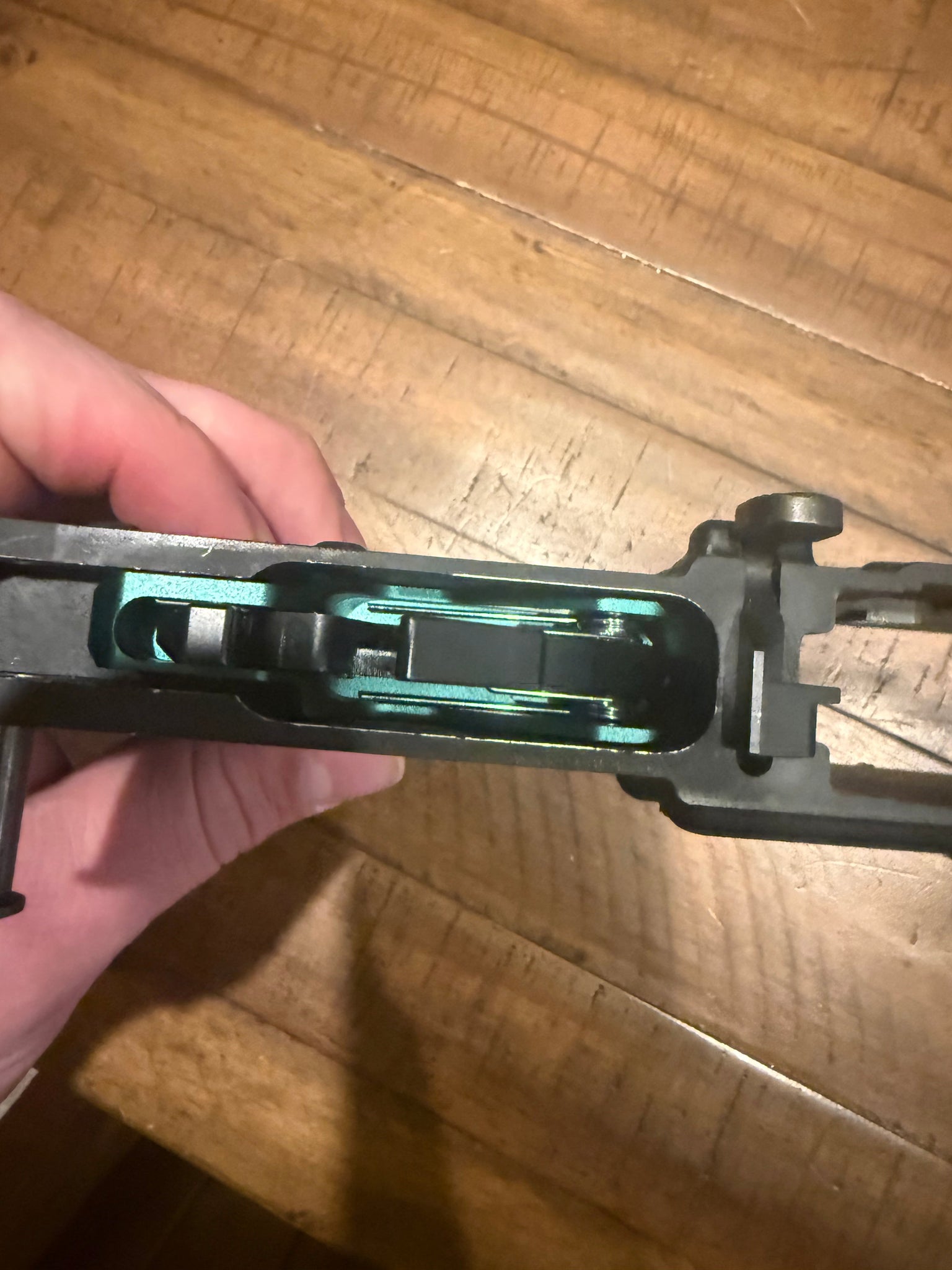
An FRT-15 forces the trigger forward via hammer motion, eliminating manual reset and relying on precise cam timing for each shot.
Key Differences Between a Reset Trigger and a Binary or Bump Fire Setup
The core distinction comes down to how the trigger resets. A reset trigger like the FRT-15 uses the weapon’s recoil to physically push the trigger shoe forward, forcing your finger off the reset point before it springs back for the next shot. A binary trigger, by contrast, fires one round on the pull and another on the release, relying on your finger’s forward movement—no forced reset. A bump fire setup mimics rapid fire by letting the whole firearm slide against your stationary trigger finger, which is far less precise. The key difference is that an FRT-15 maintains a standard, one-shot-per-trigger-pull feel but with an aggressively shortened reset cycle, while binary and bump fire fundamentally alter the shooting mechanics for speed, often sacrificing trigger control.
Q: What makes a reset trigger different from a binary or bump fire setup?
A: The FRT-15’s forced reset physically returns the trigger to the ready position using recoil, so each pull is still a single, deliberate shot. A binary fires on both pull and release, and a bump fire uses the gun’s movement against your finger. The reset trigger keeps your finger in contact with the shoe the entire time, giving you more control over each round, unlike the other two methods where timing is dictated by the mechanism or the gun’s bounce.
Why the Trigger’s Rebound Speed Matters for Your Shooting Cadence
The rebound speed of an FRT-15 trigger directly forced reset trigger super safety dictates how quickly the sear re-engages after each shot, which in turn sets your maximum sustainable cadence. If the rebound is sluggish, your finger must wait for the trigger to reset before applying the next pull, introducing a measurable delay that breaks your rhythm. Conversely, a faster rebound lets you maintain a consistent, rapid pulse without consciously tracking the reset point. This speed also affects how much finger travel you need to manage: a snappy rebound reduces the distance your trigger finger must recover, allowing for shorter, more efficient strokes. In practice, this means you can keep your support hand steady and focus on sight alignment, knowing your trigger is ready the instant your finger returns. Without adequate rebound speed, your cadence becomes choppy and inconsistent, especially during sustained fire.
- Your finger completes the pull, and the hammer falls.
- The trigger’s rebound mechanism pushes the blade forward faster than your muscle rare breed mp5 frt relaxation alone.
- This quicker reset allows your next pull to start from the exact same position, preserving a uniform cadence.
How to Install Your FRT-15 Trigger Without Damaging the Lower Receiver
Before you even press the FRT-15 trigger into your lower, you must clear the hammer and disconnector by hand, letting them drop slowly—this prevents the sear from slamming against the receiver’s pin bosses. When aligning the trigger’s rear pin hole, use a roll-pin punch to guide the axis pin through, *never a hammer directly on the lower’s aluminum, as even a glancing blow can peen the pocket and cause the trigger to bind under rapid fire*. Apply a thin coat of grease to the trigger’s cam surfaces, not the hammer face, so the friction stays in the steel parts. As you seat the front pin, hold the hammer forward with your thumb, letting the FRT-15’s trip lever clear the bolt catch without forcing it—if it resists, recheck the hammer spring orientation. Always use a padded bench block under the lower to absorb shock, and torque the pins to snug, not tight, so the trigger rocks freely. Finally, cycle the charging handle a dozen times—if the hammer follows, you’ve misaligned the disconnector trip, so strip it and start over before live fire.

Tools You’ll Actually Need for a Clean Drop-In Installation
For a clean drop-in installation of your FRT-15 trigger, skip the gunsmith and grab three essentials. A roll pin punch set—specifically 1/16-inch and 3/32-inch—prevents marring the receiver’s finish when drifting out the trigger and hammer pins. Pair that with a non-marring nylon or brass hammer; steel will leave ugly dings on your lower’s anodized surfaces. You’ll also need a bench block with receiver cutouts to cradle the lower securely, keeping pins aligned during removal. Finally, a small pick or dental tool helps seat the disconnector spring without scratching the pocket. That’s it—no vice, no jig, just controlled pin manipulation for a scratch-free swap.
Step-by-Step Fitment Guide for Mil-Spec vs. Custom Lower Housings
For a reliable FRT-15 trigger fitment, start by verifying your lower’s pocket dimensions against a mil-spec template. In a true mil-spec housing, the trigger cassette should drop in with light hand pressure—do not force it. If you’re using a custom lower with tighter tolerances, measure the trigger pocket width and pin hole alignment first. Next, install the hammer and trigger pins, checking that they rotate freely without binding. For billet or 80% lowers, you may need to deburr the pocket edges with fine sandpaper, but never remove material from the FRT-15 itself. Finally, cycle the action manually to confirm the sear resets cleanly; if it drags, re-check pin alignment before firing.
Common Installation Pitfalls That Cause Misfeeds or Double Shots
Misalignment of the hammer and trigger sears during FRT-15 installation is a primary cause of double shots, as improper sear engagement allows the hammer to slip prematurely. An over-tightened trigger pin can bind the trigger mechanism, preventing the reset cycle from completing cleanly and leading to misfeeds. Conversely, an under-torqued pin permits lateral play, altering the trigger’s geometry and causing intermittent hammer follow. Failing to correctly seat the trigger’s torsion spring under its receiver ledge creates erratic trigger movement, which directly disrupts bolt timing. Additionally, using an incorrect hammer spring orientation increases resistance, slowing hammer fall and causing the bolt to outrun the trigger cycle. Proper sear alignment and pin torque verification are critical to preventing these failures.
Misfeeds and double shots stem from sear misalignment, incorrect pin torque, and improperly seated springs—fix these three points before firing.
What Shooting Performance Can You Realistically Expect From This Forced Reset Unit?
With the FRT-15 trigger, you can realistically expect a sustained firing rate of 400–600 rounds per minute, depending on your grip strength and recoil management. Unlike binary triggers, this forced reset unit delivers a true semi-automatic cycle where the trigger physically pushes your finger forward after each shot, allowing rapid follow-ups without modifying the receiver. Your practical performance hinges on trigger control discipline—a firm, consistent pull yields faster resets, while a weak grip can stall the cycle at the reset point. In live fire, expect negligible increase in felt recoil compared to a standard trigger, since bolt velocity remains unchanged; the primary difference is cadence. Realistically, you’ll achieve 3–5 round bursts on target with minimal training, but full-auto-like dumps require deliberate shoulder tension and a stable stance to maintain accuracy beyond 15 yards.
Practical Round-Per-Minute Figures for Semi-Automatic Control
For semi-automatic control with an FRT-15 trigger, practical sustained fire typically lands between 400 and 600 rounds per minute, though most shooters stabilize near 450–500 RPM after practice. This range reflects the forced reset mechanism’s need for consistent finger pressure and full trigger releases, not just raw speed. Trigger control becomes the limiting factor: short, deliberate resets yield higher usable rates, while sloppy follow-through drops you below 300 RPM. Rapid “bump” techniques may touch 700 RPM briefly, but accuracy degrades sharply, making such figures rare breed trigger impractical for aimed shots. Practical round-per-minute figures for semi-automatic control therefore hinge on maintaining a rhythmic pull-reset cycle, with 500 RPM serving as a realistic ceiling for controlled fire.
How Trigger Finger Placement Changes Your Recoil Management
With the FRT-15, your trigger finger placement dictates whether recoil becomes a rhythm you ride or a series of interruptions you fight. Placing the pad of your finger high on the shoe—closer to the pivot—shortens the lever’s travel distance, letting the reset catch sooner and redirecting muzzle rise into a predictable, shallow arc. Slide your finger lower, toward the tip, and you introduce more leverage, which delays the sear trip, increases perceived recoil spike, and forces your support hand to overcorrect. The critical distinction is that forward pressure on the trigger shoe—maintained consistently throughout the cycle—keeps the bolt’s rearward energy from jarring your sight alignment, because the reset happens before the muzzle climb peaks. Keep your fingertip square and centered, not angled, so the reset’s forward push doesn’t torque the receiver sideways. This precise placement turns recoil from a disruptive force into a cadence you control.
Reliability Patterns Across Different Ammunition Types and Bullet Weights
When you run an FRT-15, you’ll find that reliability patterns across different ammunition types and bullet weights hinge on how the reset force interacts with your specific load. Lighter 55-grain .223 rounds tend to cycle faster and smoother, but if your buffer spring is stiff, they can short-stroke—so you’ll see more hiccups with weak factory loads. Heavier 77-grain match ammo gives a firmer, more consistent push to the bolt, which often fully resets the trigger shoe every time, but it can feel sluggish and cause bolt bounce with very fast reset rates. Steel-case ammo, while cheaper, usually has harder primers and inconsistent powder, leading to occasional light strikes or weak ejection that disrupts the reset. Stick with brass-case, mid-weight bullets (62–69 grains) for the most predictable cycling pattern across your mags.
In short, heavier bullets and brass cases give the most dependable reset, while light or steel-case loads demand tuning to avoid jams.
How to Tune and Maintain Your Forced Reset Trigger for Consistent Fire
For consistent fire with your FRT-15, start by ensuring the trigger and hammer pins are properly staked, as any lateral play disrupts the reset cycle. Lubricate the sear engagement surfaces and the trigger’s cam track with a light coat of high-viscosity grease, avoiding heavy oils that attract carbon. After each range session, disassemble the trigger pack and use a solvent-soaked nylon brush to remove fouling from the reset lever’s pivot and the bolt carrier’s trip lug. Check the trigger return spring for fatigue—a weak spring causes short-stroking, while a stiff one prevents the forced reset from completing. Tuning involves adjusting the bolt carrier’s buffer weight; a heavier buffer (H2 or H3) smooths the cyclic rate, while a lighter carrier group may require a stronger trigger spring to maintain positive reset. Dry-fire testing with snap caps verifies the reset point before live ammunition. Q: What causes intermittent doubles with an FRT-15? A: Usually insufficient lubrication on the reset cam or a worn trigger spring, both of which delay the sear trip. Always re-check the hammer’s engagement angle after 500 rounds, as peening alters the forced reset timing.
Adjusting the Spring Tension to Match Your Grip Strength and Glove Use
Adjusting the forced reset trigger spring tension begins with your bare-hand grip, as lighter pressure requires a weaker spring to avoid short-stroking the reset cam. When wearing thick gloves, you must increase tension proportionally, because the added material reduces tactile feedback and over-travel sensation, causing premature trigger releases. Benchmark your baseline by firing five rounds ungloved, then install gloves and turn the adjustment screw clockwise in quarter-turns until the reset click feels identical to your bare-finger reference. If the trigger fails to reset fully, your spring is too tight; if it doubles or fires before full reset, it is too loose. Always test with your dominant firing hand only, since support-hand pressure changes the receiver harmonics.
Cleaning Schedules and Lubrication Points That Keep the Rebound Snappy
For the FRT-15, the rebound assembly’s snappiness hinges on a strict 300-round cleaning interval for the trigger pocket and sear surfaces. Wipe carbon with a dry cloth, then apply a single drop of lightweight oil (e.g., Slip 2000 EWL) to the **trigger rebound spring guide and cam track**—never the sear face. Lubricate the hammer pivot pin and the carrier’s trip lug every 500 rounds, using a grease like TW25B for shear resistance. Over-oiling attracts grit, so blot excess after each session. The rebound speed degrades subtly before any audible change, so trust your cadence, not sound. Q: **How often should I relube the trip lever pivot to keep the rebound snappy?** A: Every 500 rounds, or immediately after any cleaning that involves solvent washdown, which strips residual film.
When to Replace Worn Components vs. Buying a Whole New Trigger Pack
For a forced reset trigger, replace individual components when wear is isolated to the sear, hammer notch, or trigger return spring, and function remains crisp between failures. A worn disconnect lug that causes intermittent reset is best fixed with a single part. Conversely, buying a whole new trigger pack is justified when multiple engagement surfaces show peening, the scar frt trigger housing itself is cracked, or you’ve already replaced three parts within a year—since stacked tolerances degrade reliability faster than any single fix. If the carrier’s trip lug is also worn, replacing only the pack leaves the root cause, so diagnosis must precede purchase. Cost-wise, a complete pack makes sense when labor and shipping for repeated swaps approach 70% of a new unit’s price.
| Condition | Replace Component | New Trigger Pack |
|---|---|---|
| Single worn sear edge | Yes | No |
| Cracked housing or multiple peened surfaces | No | Yes |
| Recurring issues after two part swaps | No | Yes |
| Carrier trip lug damage | Fix carrier first | Only after carrier repair |
Choosing Between the FRT-15 and Other High-Speed Triggers: What Fits Your Setup Best?
The FRT-15’s forced-reset feel is a binary-like slap that rewards a firm, steady grip—but if your rifle is a lightweight competition build, that aggressive bounce might walk your muzzle off target faster than a traditional single-stage can. I tested mine on a 16-inch carbine with a heavy buffer, and it ran flawlessly, yet swapping to a skeletonized lower amplified the click-clack into a rhythmic shove that hurt accuracy. Meanwhile, a drop-in CMC single-stage gives you speed only if your finger does the work, while a Hiperfire with its reduced lock time suits shooters who want crispness over cadence. The real question isn’t “fastest” but “controllable”: Does your stock fit your shoulder weld, and can you keep the front sight steady through four rapid pulls? For me, the FRT-15 wins only when the upper is tuned—gas block tight, recoil spring stiff. Q&A: If I use a 10.5-inch pistol, will the FRT-15 be too snappy? Yes, unless you add a muzzle brake and a heavier carrier, because the shorter dwell time amplifies the trigger’s reset kick. Otherwise, stick with a forced-reset from a brand like Binary by Franklin—softer, but less fun.
Comparing the Reset Speed and Pull Weight to Drop-In Competition Triggers
When you pit the FRT-15 trigger’s reset speed and pull weight against a drop-in competition trigger, you’re looking at two totally different jobs. A race trigger like a Timney or TriggerTech offers a crisp, ultra-light 1.5–2.5 lb break with a short, tactile reset designed for precision on a bench. The FRT-15, by contrast, pulls heavier—usually 4.5–6 lbs—because its sear geometry has to reliably catch and release during that forced-reset cycle. Its reset is aggressive and snappy, but not short; it travels further back to initiate the next shot. Competition triggers feel almost fragile next to that, and they won’t give you binary-like speed. You trade that velvet touch for raw cyclical rate.
- FRT-15 pull weight is typically double that of a match trigger, so finger fatigue hits faster during mag dumps.
- Reset travel is longer on the FRT-15, meaning you need to fully release the trigger, unlike the micro-reset of a drop-in.
- Creates a learning curve—muscle memory from a m249s binary trigger competition trigger will cause short-stroking on the FRT-15.
Compatibility Checks for Pistol Caliber Carbines and Rifle Length Gas Systems
When evaluating the FRT-15 compatibility for pistol caliber carbines, the bolt carrier group’s travel distance and carrier mass must be verified against the trigger’s sear trip geometry. For rifle length gas systems, the gas port’s dwell time and buffer weight directly influence whether the carrier’s forward momentum resets the trigger’s disconnector without outrunning the hammer. A pistol caliber round produces lower bolt impulse, so a standard carbine buffer may cause short-stroking, while an overly heavy buffer can prevent the forced-reset from completing. Additionally, the carrier tail’s length must clear the trigger’s trigger bar; many 9mm AR bolts use a different cut that intercepts the FRT-15’s trip lever prematurely. Test with a full magazine, not snap caps, to observe real cyclic behavior.
Questions First-Time Buyers Ask About Legal Use in Semi-Auto Platforms
First-time buyers often ask whether dropping an FRT-15 into a standard semi-auto platform changes its legal classification, and the honest answer hinges on how the trigger’s forced-reset function interacts with your receiver’s existing fire-control geometry. They want to know if a binary-style shortcut counts as “automatic” fire—it does not, because the hammer resets only after the bolt cycles and your finger releases, preserving the one-shot-per-trigger-pull principle. Another frequent question: “Will the FRT-15 require proprietary parts to stay compliant in my AR-15 or MPX?” No—it uses mil-spec dimensions, but you must verify that your hammer and bolt carrier don’t create unintended sear contact. Legal-use compliance in semi-auto platforms starts with confirming your upper’s gas system doesn’t outrun the trigger’s reset, since a short-stroke piston can cause hammer-follow, which some ranges misread as full-auto. Finally, they ask if a drop-in cassette is “safer” legally—not inherently, as the FRT-15’s forced reset is the defining feature, so test it on a bench first.

